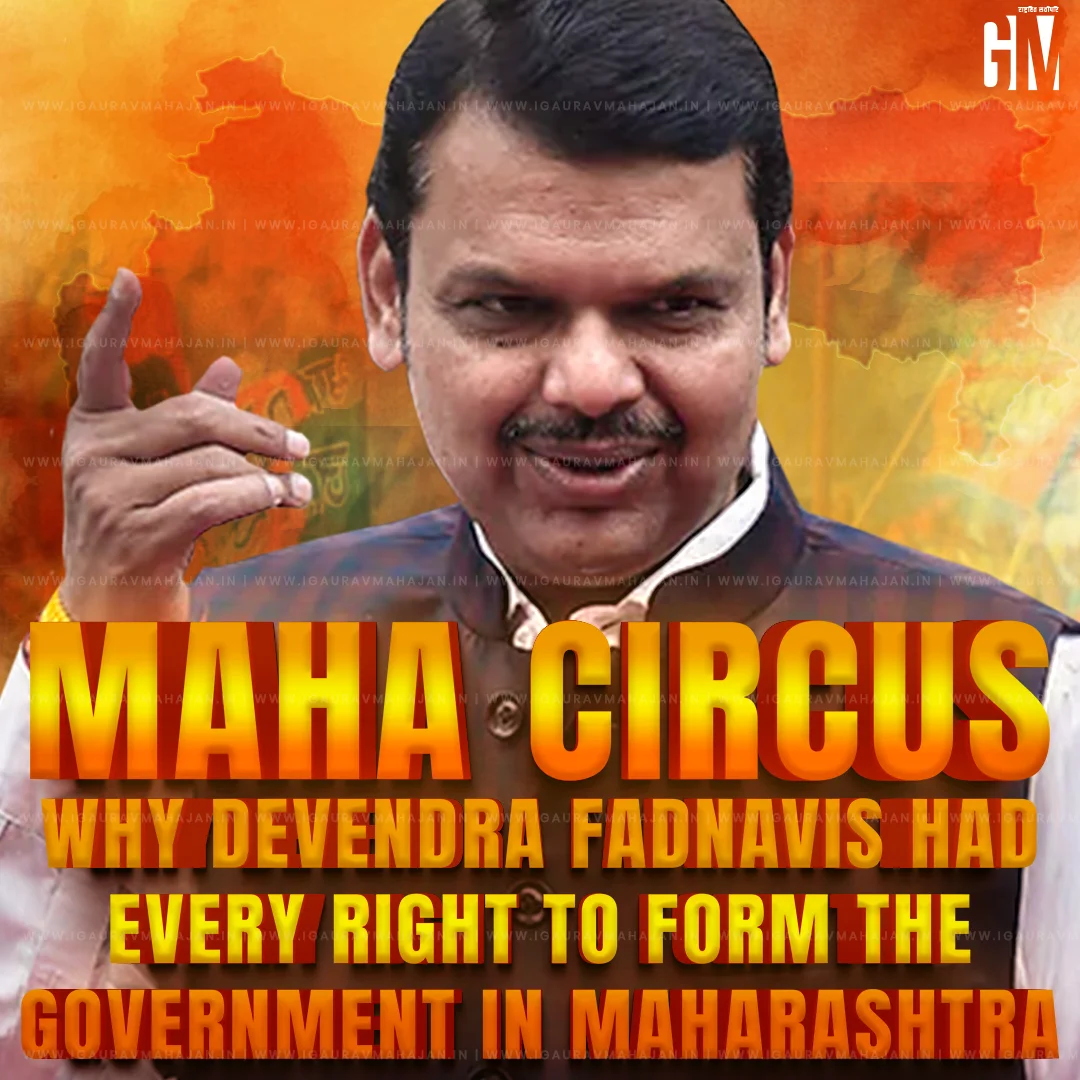
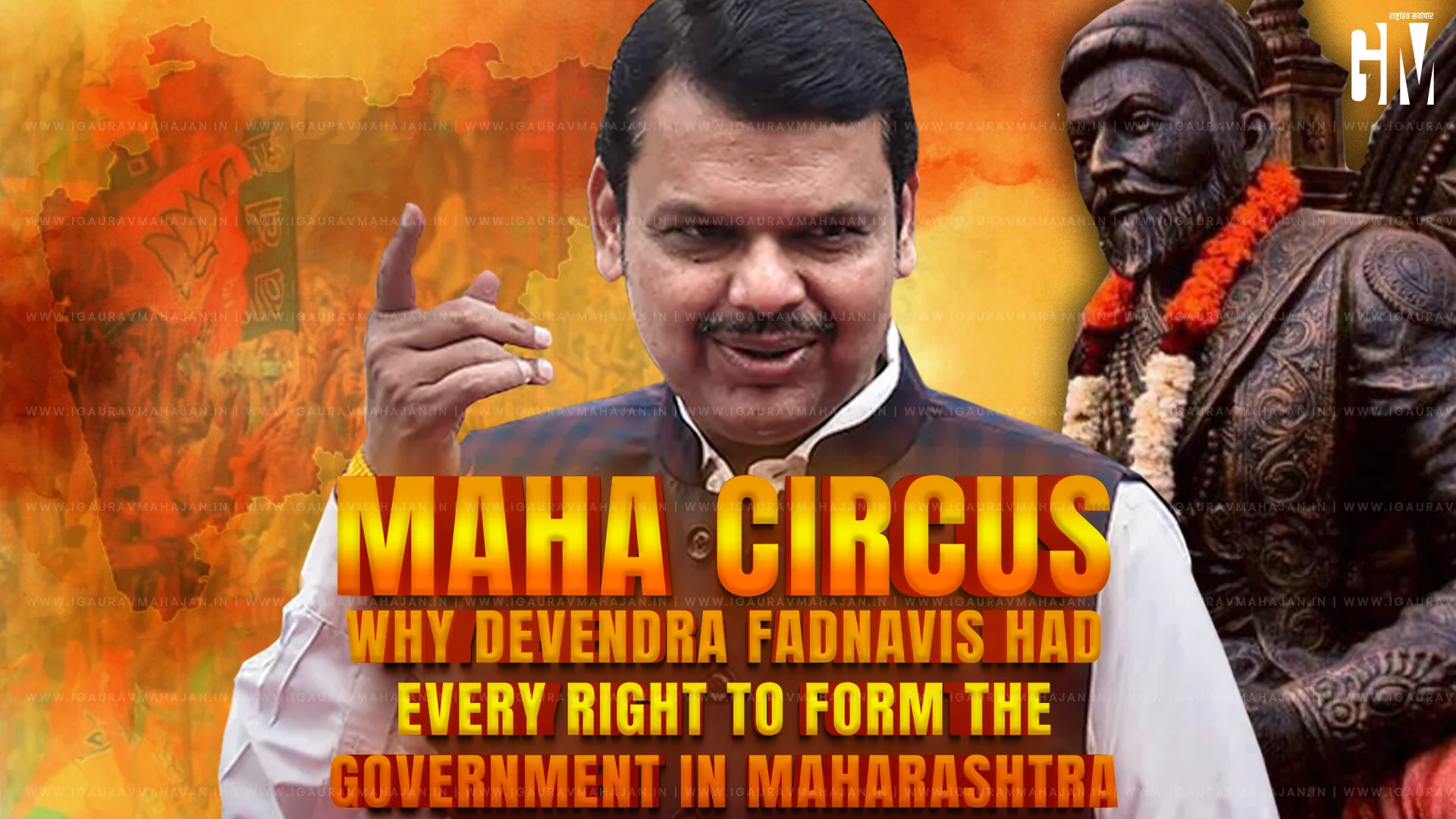

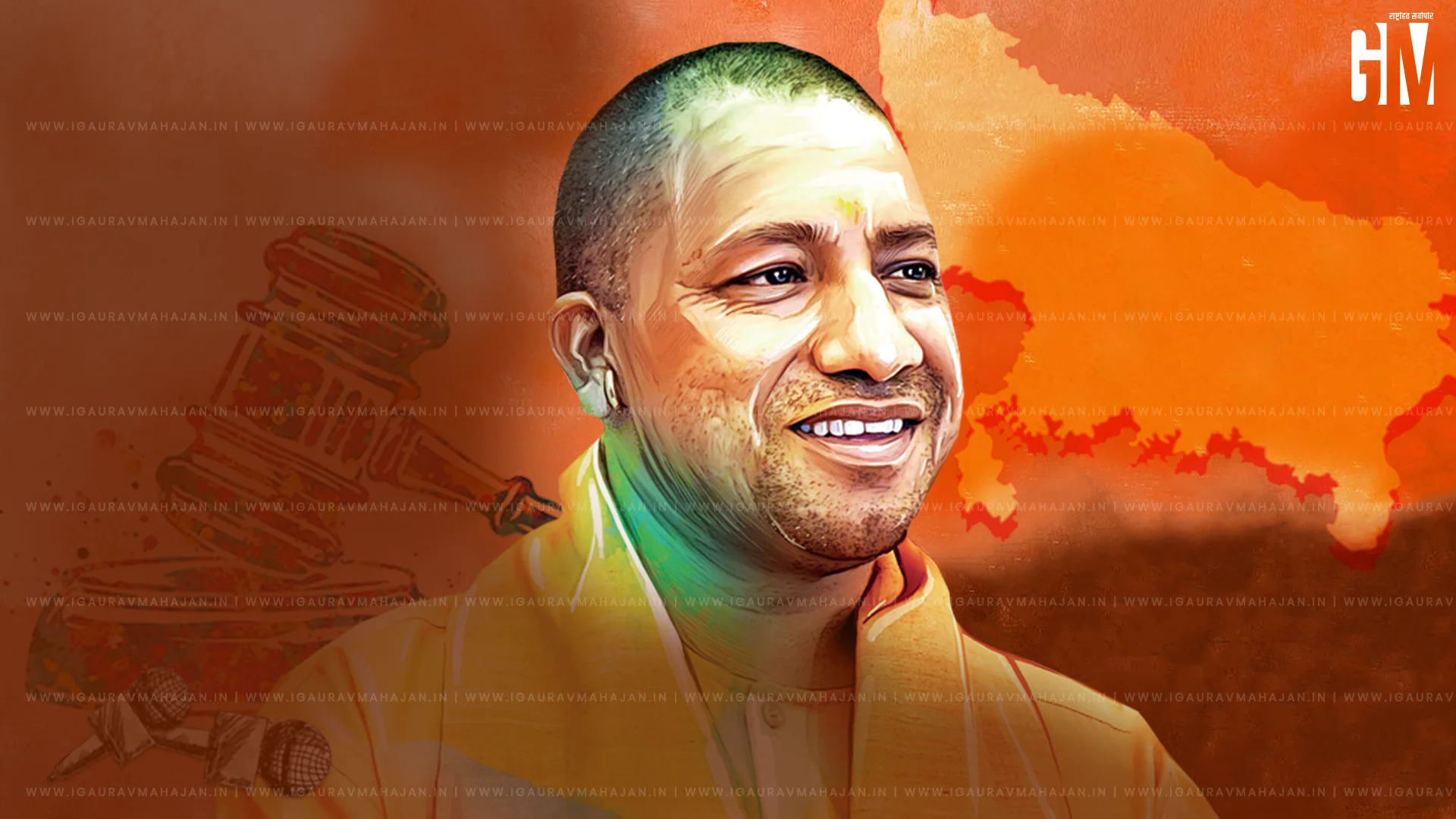
Maha Circus: Why Devendra Fadnavis Had Every Right To Form The Government In Maharashtra

Was BJP’s alliance with Ajit Pawar immoral or pragmatic? Maharashtra’s political history exposes opposition hypocrisy while justifying Fadnavis’ decisions. This piece explores the real motives, the betrayals, and the untold necessity behind BJP’s stand.

click play to listen to the article

न स्वधर्मे निधनं श्रेयः परधर्मो भयावहः।
Better to die following one’s own dharma than to follow another’s path, which is full of fear and destruction.
Maharashtra’s political landscape is a textbook example of shifting loyalties and strategic realignments. BJP’s decision to align with Ajit Pawar wasn’t a departure from ideology but a response to betrayal. In a state where history repeats itself through engineered splits and opportunistic coalitions, Fadnavis’ action was both realistic and responsible. Rather than being judged against an idealistic fantasy, the BJP’s choices should be seen in the light of political necessity and voter trust. The moral burden cannot be the BJP’s alone in a battlefield where everyone else conveniently shuns it. Politics is about governance, not staged morality.

Maharashtra’s 2019 political saga was less a story of electoral numbers and more of betrayal, shifting ideologies, and raw opportunism. At the center stood Devendra Fadnavis, leader of the BJP, navigating a storm that was less about governance and more about perception. The BJP emerged as the single largest party with an overwhelming mandate, while its ally, the Shiv Sena, chose a path that contradicted pre-poll promises. Despite campaigning with the BJP as a united front, Shiv Sena abruptly abandoned the alliance post-election, citing unjust distribution of power. Their decision to forge ties with the Congress and NCP wasn’t just surprising, it was a complete reversal of ideological commitments.

In this political vacuum, aligning with Ajit Pawar wasn’t just strategic; it was essential. The BJP owed it to its voters to attempt every possible route to uphold the mandate. Critics accusing the BJP of abandoning morality often forget the rampant history of political betrayals by its rivals. The Congress and NCP have normalized backdoor entries, ideological U-turns, and shameless power grabs. Sharad Pawar himself once walked out of a Congress government to form his own, and later aligned with the same party. His track record includes orchestrated defections, controversial alliances, and political coups.

To vilify the BJP while absolving the rest is selective outrage. In a landscape where every party plays politics, why is only the BJP expected to follow saintly ideals?

To understand why BJP’s critics fall flat, one must first examine the political record of those pointing fingers. Shiv Sena’s history is riddled with paradoxes, often aligned with ideology only when it suited power. In the 1960s, it was the Congress that nurtured the rise of Shiv Sena to undercut Communist influence in Mumbai’s labor unions. The Congress stood by while Shiv Sena violently suppressed its rivals, gaining strength and numbers. Later, despite their proclaimed anti-Congress stance, Shiv Sena went on to support Indira Gandhi’s Emergency, even earning the moniker “Vasant Sena.”

Over decades, Uddhav Thackeray’s party has wavered between ideological extremism and political opportunism. From sharing a stage with the Muslim League to equating Congress with cancer and then partnering with them to claim power—this is not evolution, it is convenience. The irony is deafening when current Shiv Sainiks, once loyal to Balasaheb Thackeray’s ideology, swear allegiance to Sonia Gandhi’s leadership.

Meanwhile, Sharad Pawar’s tactics have become a masterclass in political manipulation. Whether walking out with 38 MLAs in 1978 to topple a Congress government or poaching his friend’s godson, Chhagan Bhujbal, to weaken Shiv Sena, Pawar’s legacy is one of strategic betrayal. His own party, the NCP, was born from opposing Sonia Gandhi’s foreign origin, yet today he stands as her trusted ally. When he undermined Gopinath Munde by bringing Dhananjay Munde into his fold, it was called a masterstroke—not immoral.

Every opportunistic move by Congress, NCP, and SS has been framed as political genius by a sympathetic media. But BJP’s attempt to respond with equal political ingenuity is met with moral outrage. The standard is not only unfair, it’s hypocritical. The opposition’s only unifying ideology today is anti-BJPism. Their alliances are not born out of shared vision but mutual insecurity. Against such a backdrop, BJP’s insistence on forming the government was not just fair—it was necessary.

In a democracy, consistency matters—but it has been sorely lacking in Maharashtra’s political theater. The very leaders who speak of morals today were once champions of undemocratic moves and opportunistic defections. Their loyalty shifts faster than alliances. For BJP to be singled out while others get a pass is evidence of political bias, not virtue. When ideology is traded for position, when enemies become friends overnight, the lines blur. BJP’s efforts to hold the center amid this chaos are not only legitimate—they are responsible. The public deserves stability, not sanctimonious lectures from political shapeshifters.

Political morality is a luxury often demanded from those who dare to lead decisively. In the case of Devendra Fadnavis and the BJP, what unfolded in Maharashtra was not a betrayal of values but an assertion of responsibility. Fadnavis had the electoral mandate, a supportive base, and a vision for the state’s future. The BJP could have chosen to watch from the sidelines as a three-party alliance, united only by their dislike of the BJP, tried to rewrite the mandate. Instead, it acted.

Aligning with Ajit Pawar was never meant to be a long-term ideological embrace. It was a political counter-move—one that reflected adaptability, not desperation. The hypocrisy lies in critics who glorify Congress-NCP-SS deals as masterstrokes but call BJP’s moves unethical.

In politics, especially in a dynamic state like Maharashtra, stagnancy is defeat. The BJP proved it could think fast and act faster. Fadnavis may have stood alone in that brief government formation, but he stood for something vital—the will of the people who voted for stability, not confusion.

Let’s face it—no matter what BJP does, it is always expected to be held to a higher standard. This isn’t a complaint; it’s a testament to the party’s unique position in Indian politics. While opposition parties engage in political theatre, indulge in contradictions, and change alliances as easily as changing clothes, BJP is still expected to behave like a paragon of virtue.

But virtue doesn’t mean impotence. BJP is not in politics to be remembered as the party that played fair while losing power. It is here to lead Bharat toward progress. Sometimes that means making uncomfortable decisions. The alliance with Ajit Pawar may not have been morally ideal, but it was politically correct and strategically sound. What makes BJP different is not that it never compromises, but that it does so with a larger goal in mind—national development, stability, and strong governance. Compare that to Congress whose legacy includes the Emergency, dynastic politics, and blatant misuse of constitutional mechanisms to retain power. Or Shiv Sena, which has betrayed its founding ideology by shaking hands with those it once called its enemies.

The lesson? Politics without power is poetry. Good governance demands presence in power. The BJP understands that without power, promises remain dreams. The people of Maharashtra trusted BJP with a mandate, and BJP chose to honour it, not surrender it. In this murky arena, BJP didn’t just have the right to form the government—it had the responsibility. And it stood up, took the risk, and showed that pragmatism can coexist with purpose. That’s leadership. That’s Bharat’s future.

Share this article:
iGauravMahajan.in Logo – Indian Development, Politics, and Nationalist News Platform

Recommended For You

Scroll to Top