
- June 28, 2025
- 7 mins
Restoring Democracy
click play to listen to the article
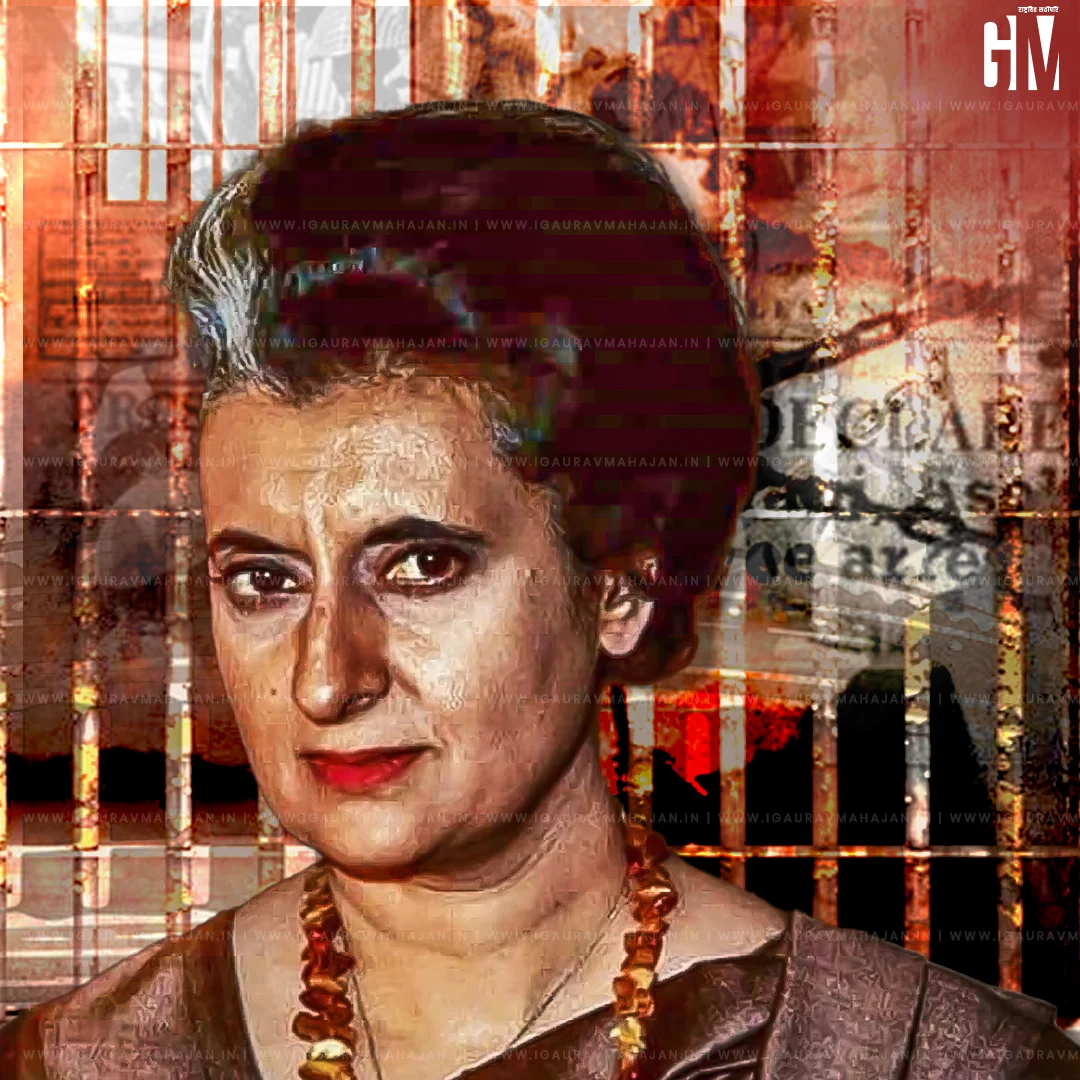
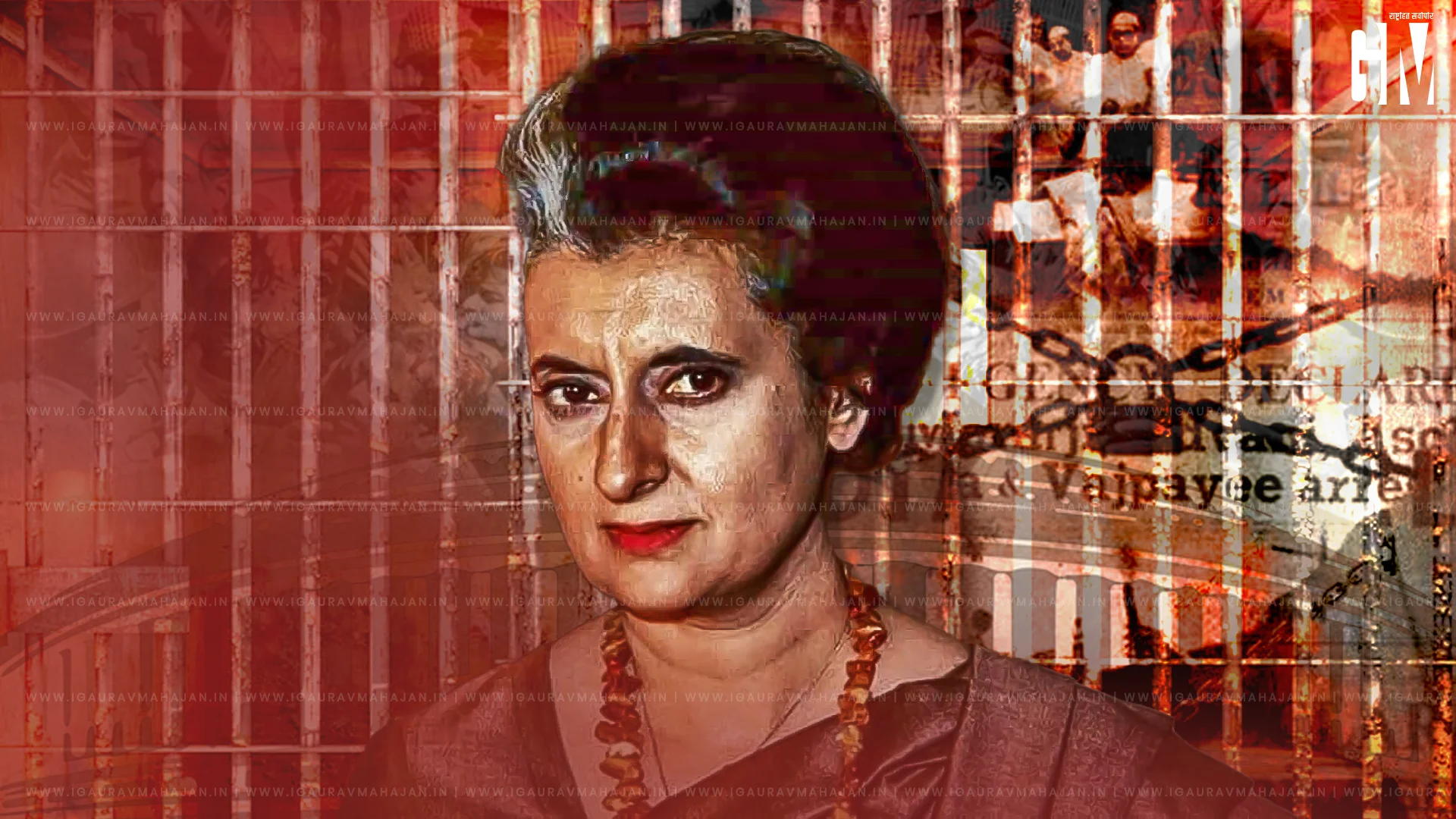
On 25 June 1975, Indira Gandhi imposed the Emergency — not to protect the Constitution, but to protect her own chair. The Supreme Court had declared her election invalid. Instead of resigning, she responded with dictatorship.
This was not a political event. It was a declaration of war against the Indian people. Overnight, fundamental rights were suspended. Newspapers were censored. Editors were jailed. Protesters were tortured. Even judges were forced to comply or be cast aside. The Constitution — the very soul of the republic — was amended by a nervous autocrat sitting atop a crumbling empire.
Congress didn’t just crack down on dissent — it institutionalised fear. Youth leaders were jailed without trial. Press offices were raided. Opposition parties were dismantled by brute force. It wasn’t governance — it was fascism dressed in khadi.
And yet, the Lutyens media of that era didn’t protest. Many bent the knee. Others turned collaborators. It was the darkest period of Indian democracy, and yet to this day, Congress has neither apologised nor shown remorse.
It took courage to resist. Leaders like Jayaprakash Narayan and Atal Bihari Vajpayee stood firm. RSS workers risked their lives. Thousands were jailed. The fight wasn’t just political — it was moral.
And Bharat fought back. Every jailed activist, every underground pamphlet, every whispered protest in the night kept the flame of democracy alive. The Emergency didn’t just expose Indira Gandhi. It exposed the true face of Congress — authoritarian, entitled, and ruthless.
The darkness of the Emergency did not come suddenly. It was carefully built — one step at a time. When the judiciary became inconvenient, it was attacked. When media questioned power, it was gagged. And when the people resisted, they were crushed. All under the watch of a Prime Minister who saw herself as the nation’s saviour — not its servant.
What Indira Gandhi did in 1975 was not an aberration. It was the logical extension of Congress’s DNA. From Nehru to Sonia, the party has always prioritised family over freedom. The only difference during Emergency was that they stopped pretending otherwise.
More than 1,00,000 people were detained without trial under MISA and DIR. Among them were poets, professors, students, workers, farmers — anyone who dared to question authority. Sanjay Gandhi, with no constitutional post, ran the country like a princeling. Forced sterilisation drives, slum demolitions, and state-sponsored terror became daily realities. Congress turned India into a laboratory of totalitarian control.
And yet, the same Congress today lectures others on “democratic values.” Rahul Gandhi speaks of “institutions under threat” while sitting atop the legacy of the biggest institutional annihilation India has ever seen.
It was only through relentless resistance that democracy could be restored. JP’s movement became a moral revolution. The Janata Party may have been an unstable coalition, but in 1977, they gave India a chance to breathe freely again. The people showed that democracy may bend, but it won’t break. This victory wasn’t just electoral. It was civilisational. It reminded India that power belongs to the people — not to palaces in Delhi. And yet, the fact that Congress continues to defend Emergency-era actions shows that it has learned nothing. Their silence is not accidental — it is ideological. They still believe they are above scrutiny. Above law. Above Bharat.
The Emergency was not a sudden lapse in judgment. It was a calculated move to maintain personal power. Every autocrat justifies tyranny by claiming national interest. Indira Gandhi did the same. She claimed that “discipline” was needed. But whose discipline? The people’s, or the rulers’?
It is important that every generation knows the truth — that Congress didn’t save the Constitution. It strangled it. Today’s youth must remember that the fight to restore democracy was led not by Congress, but by those they jailed. Leaders like LK Advani, Morarji Desai, and thousands of unsung warriors who refused to be silenced.
What is disturbing is that even today, Congress avoids accountability. They speak of “democratic decline” when out of power, but they have never acknowledged their own history of dictatorship. Not a single family member has apologised. No resolution has condemned Emergency from within the Congress Working Committee. This is not forgetfulness — it is arrogance. Emergency ended, but the mentality survives.
The power to restore democracy came from the people. But that power must remain awake. Because the next Emergency will not come with sirens. It will come silently — through biased narratives, politicised institutions, and moral cowardice.
What is the greatest lesson from the Emergency? That Bharat will resist — but it must never sleep. Congress has always treated power as inheritance, not responsibility. And when its entitlement is threatened, it responds not with humility but with tyranny.
The BJP has never imposed Emergency. It has never suspended rights. It has never jailed opposition en masse. Yet, the same media that turned collaborator in 1975 today accuses BJP of being “fascist” — for doing far less than what Congress actually did.
This is not just hypocrisy. It is inversion of truth. BJP’s rise represents a return to the constitutional spirit that Congress violated. It represents a people-first, not family-first, vision of governance. And it stands as a firewall against another Emergency — whether overt or ideological.
Congress continues to hide behind nostalgia and victimhood. But history cannot be forgotten — especially when the perpetrators are still pretending to be saviours.
The moral of the Emergency is clear: never trust a party that once destroyed democracy to now defend it. Congress has proven that it sees power as birthright. And that is why Bharat rejected it — not once, but again and again.
Indira Gandhi once said, “India is Indira, Indira is India.” The people of India disagreed.
Today, under BJP, Bharat speaks in its own voice — not through dynasties. Democracy is not a slogan — it is a lived truth.
And it was BJP that restored that truth. Not with violence, but with votes. Not with fear, but with faith in Bharat.
Share this article:
- TAGS: Anti-India, Congress, Gandhi Dynasty, Nation